
Pick UP
-
 Sold out
HELMET BAG
Regular price ¥48,000 JPYRegular priceUnit price per -
 Sold out
PERSONAL EFFECTS BAG
Regular price ¥18,000 JPYRegular priceUnit price per -
RYUBEI T-SHIRT (Best Soda)
Regular price ¥10,780 JPYRegular priceUnit price per -
RYUBEI T-SHIRT ($chip)
Regular price ¥9,680 JPYRegular priceUnit price per


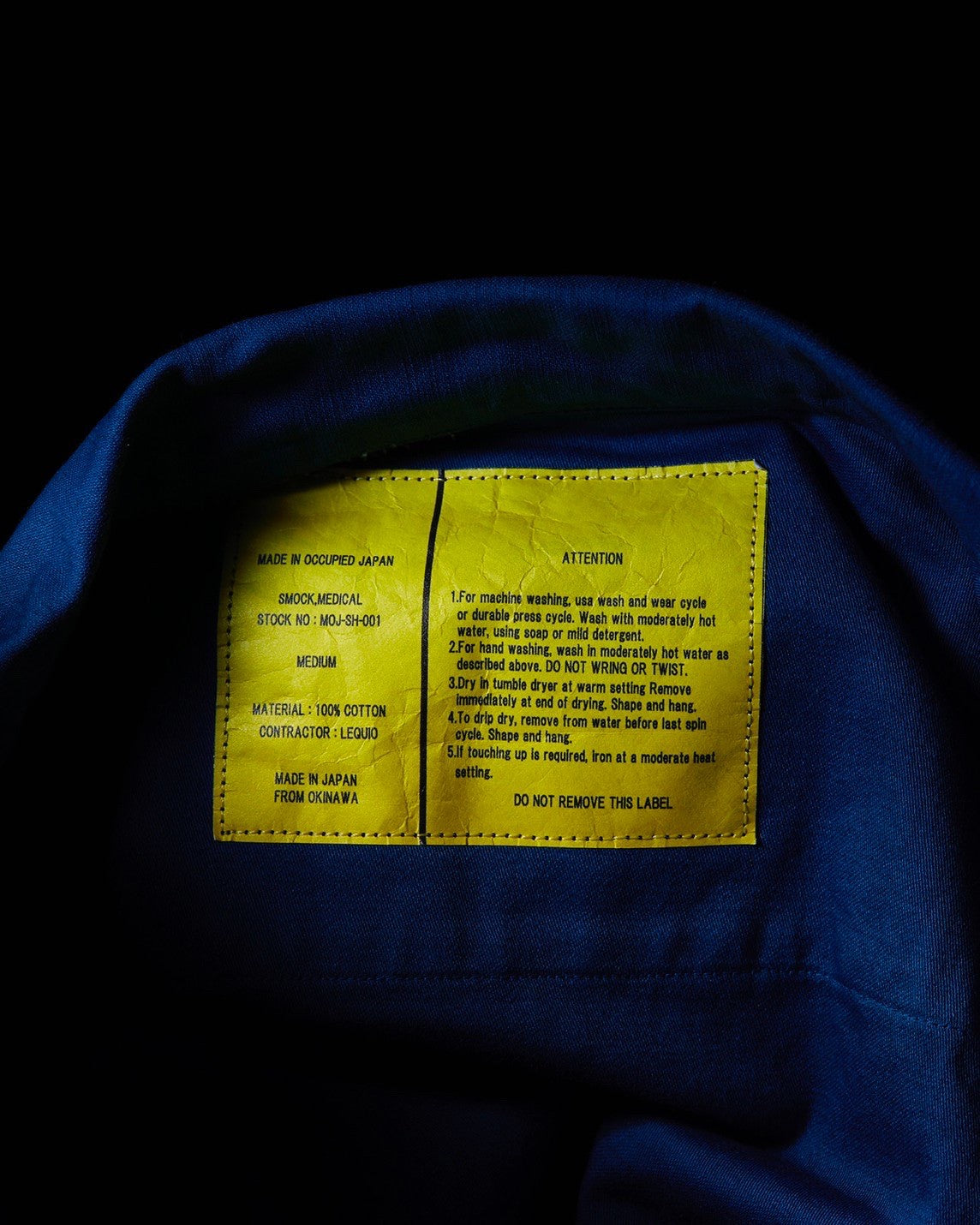
About “MADE IN OCCUPIED JAPAN”
About
The term originates from a label that was required on imports from Japan from 1947—after the end of the war—until 1952, when the Treaty of San Francisco came into effect, to indicate that the goods were manufactured in Japan under occupation.
Although Okinawa is now a tropical paradise, during the Pacific War, fierce ground battles raged there, and the island was indiscriminately destroyed to the point where the landscape was altered. After the war ended, there were shortages of everything—clothing, food, and shelter.
Even in such harsh conditions, people used their ingenuity to create various items from limited resources. They melted down the wreckage of fighter planes to make pots, hollowed out large gas tanks to build boats, and used rationed flour sacks as sails to go fishing. All of this was done simply to survive.
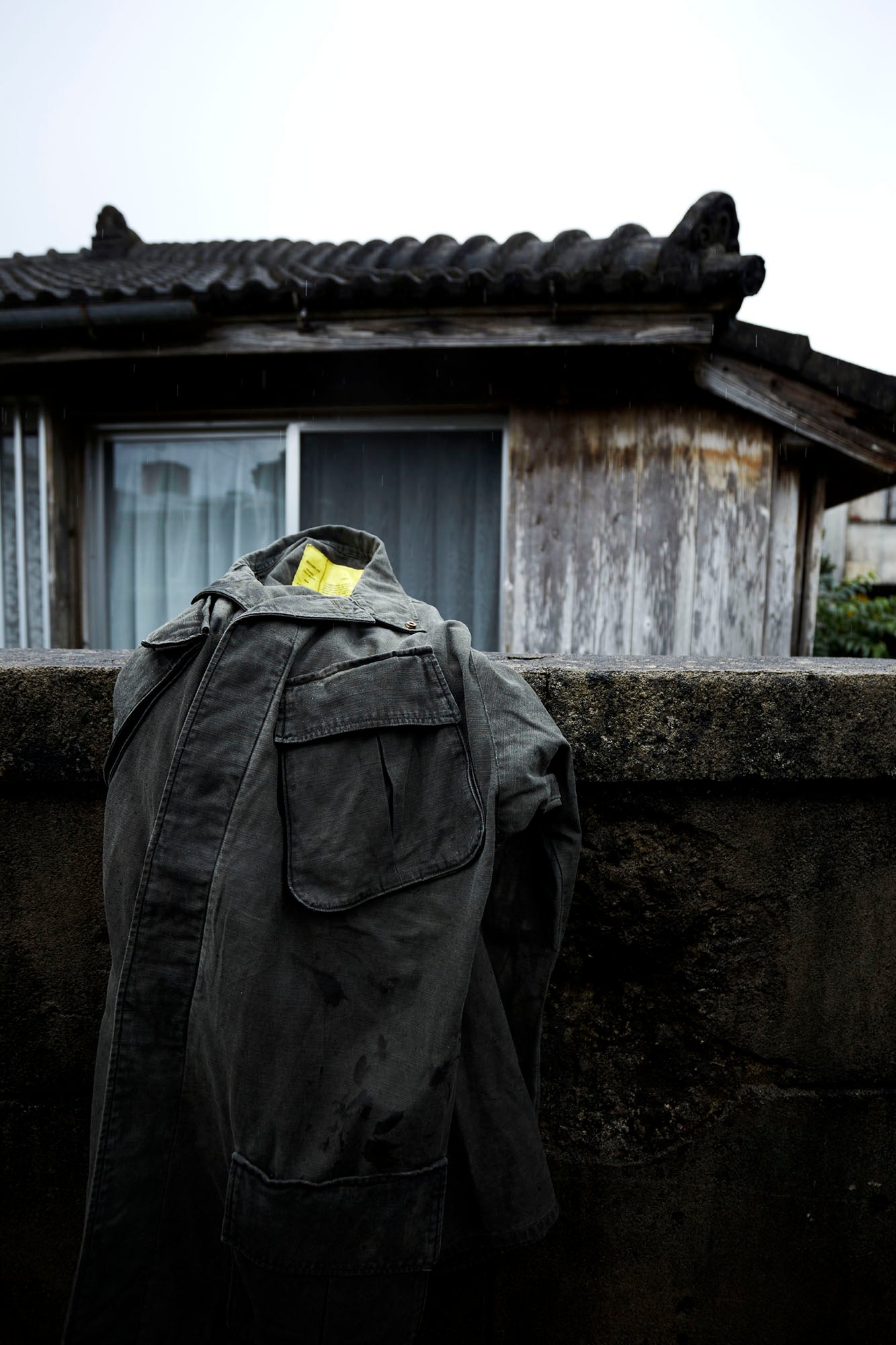
The U.S. military surplus tents and equipment used in our products could be considered a “negative legacy” when one considers their original purpose and the environments in which they were used. However, by deliberately using these materials to create designs and functions that blend into everyday life—and by transforming them into everyday items for purposes other than their original ones, just as those who lived through that era did—we aim to turn the phrase “MADE IN OCCUPIED JAPAN” into a message of peace and pass it on to future generations.
Okinawa Surplus Shop

In Okinawa, “Surplus Shops” (stores selling military surplus goods) are scattered along national highways and around U.S. military bases; they sell items purchased at regular auctions held with permission from the U.S. military. Since bidding takes place in units of one cargo shipment—resulting in the purchase of enormous quantities at once—many of these shops have a unique atmosphere where, at first glance, it’s hard to tell whether you’re looking at a store or a warehouse. Upon entering, you’re overwhelmed by the haphazardly piled-up camouflage and OD (olive drab) military jackets and coats.
The stores are also overflowing with items like steel tableware and gas masks—objects whose uses and purposes would be unclear without an explanation. We literally dig through these mountains of goods to unearth the materials and design sources we’ll use for “MADE IN OCCUPIED JAPAN.”
U.S Military tent

Officially known as the “SHERTER HALE TENT,” this small shelter tent has been in use for over half a century, with its basic design remaining virtually unchanged since World War II. Two soldiers each carry one sheet, and a pair of sheets forms a single tent. Many of the tents used in “MADE IN OCCUPIED JAPAN” were manufactured between the 1960s and the 1990s.
Many of the materials used were actually in service at the time, and we carefully inspect the condition of each piece—checking for scratches and stains caused by use—before cutting them. In the process, we deliberately incorporate these scratched and stained areas, resulting in bags with a unique, one-of-a-kind character.
Process

First, wash the fabric. The tents used in “MADE IN OCCUPIED JAPAN” vary widely in age and type. Among them, the large tents are a real challenge just to unfold.
Cutting is a crucial step that determines the final result. We spread the tent out on the cutting table, check for any scratches or stains, and position the patterns—the blueprints for the design—while visualizing the finished product. Since each piece varies in thickness and size, we apply paint to the thinner fabrics after cutting. This enhances the fabric’s strength and water resistance while adding body, allowing us to create bags that retain their shape even when empty. After going through these various steps, we finally begin the actual work.

Zippers, linings, pockets—each individual part is carefully sewn together. Because the fabric is stiff and thick, with every stitch, a loud “thud” echoes through the workshop, as if a hammer were striking the needle.
The stitching is the face of the product. Carefully, with heart and soul, the worker advances the needle one stitch at a time.
Finally, the lining and outer fabric are sewn together, and the garment is turned right side out. Because the fabric is so stiff, this requires a great deal of strength. To finish, excess thread is trimmed, and the garment is checked for fraying or any sewing imperfections.
Finished

Zipper

Features vintage zippers from the “WALDES” brand. “WALDES” was an actual brand that existed in the United States in the 1930s; the Japanese company “Asahi Fastener” has faithfully reproduced its original manufacturing methods and specifications to reissue these vintage zippers.
Lining
Made from “tarpaulin,” an industrial material used for truck covers, tents, and similar applications. It is characterized by its sturdiness, stain resistance, and waterproof properties.
Other Parts
Sturdy deadstock belts and twill tape formerly used by the U.S. military are used for the handles and edging.
About “琉米 Planning”
Okinawa's History: A World Apart from Other Prefectures
- How to Pass This On to the Younger Generation and Help Them Learn -
The brand name “MADE IN OCCUPIED” means “Made in Occupied Japan.” It was a designation required on Japanese exports from 1947, following the end of the Pacific War, until 1952, when the Treaty of San Francisco came into effect. Although Okinawa is now regarded as a tropical paradise, during the Pacific War, it was the site of fierce ground battles and was indiscriminately devastated by air raids and naval bombardment to the point where the landscape was altered. After the war, it came under U.S. administration and was returned to Japan in 1972; approximately 70% of the population still resides in Okinawa, and the island retains a strong sense of its unique culture and urban landscape—a blend of Okinawan and American influences distinct from the Japanese mainland.

The generation born after 1980 wants to understand the reasons behind the cityscape that emerged after Okinawa’s reversion to Japan and pass that understanding on to future generations. This includes the generation that actually experienced the Battle of Okinawa, the generation that grew up in Okinawa under U.S. administration, and the generation raised by those who lived through that time.

As time goes on, I feel that opportunities to hear firsthand accounts of real-life experiences from people themselves are becoming fewer and fewer, and that Okinawa’s rich history is gradually fading away.
琉米Planning (琉球(沖縄)Ryukyu [Okinawa]、米国(アメリカ)U.S.)
We aim to share Okinawa’s history through the lens of fashion, conveying it not only to Okinawa’s younger generation but also to people outside the prefecture.
Brand Icon
We designed our brand icon based on the B-yen (military notes), which were issued by the U.S. military as official currency starting in 1946.
1945, when Okinawa came under U.S. administration; 1946, when the B-yen became the official currency; 1958, when the B-yen was abolished and replaced by the U.S. dollar; and 1972, when Okinawa was returned to Japan. We have listed these significant years in Okinawa’s history. To convey the cultural exchange between the Ryukyu Kingdom and the United States, we have included the characters “Ryū” (Ryukyu) and “Mai” (U.S.).
While this may not be very familiar to many, this icon is imbued with deep meaning and serves as a first step toward sparking interest.

Special thanks

The photographer who collaborated with us on this project is Kazuo Kuniyoshi, born in 1946, a former photographer in the Photo Department of the Ryukyu Shimpo editorial office. Since 1968, he has photographed postwar Okinawa from various perspectives and has provided us with important photographs imbued with powerful messages. We invite you to fully experience the authentic scenes of that era, as well as the strength and fragility of the Uchinanchu (Okinawans), who looked forward and carved out their history even while caught between the United States and Japan.
We also asked photographers from the next generation—who did not experience the postwar era but will carry history forward—to capture artifacts from that time through their own unique perspectives, imbuing their work with their own messages.
Ryuta Aragaki, born in 1988, is currently active primarily in Tokyo.
Komei Kinjo, born in 1988, is active as an embroidery artist in his hometown of Ogimi Village.
Though he did not experience that era firsthand, he shares his perspective while simultaneously learning about and passing on the legacy of his native Okinawa.
Two individuals who lived through the postwar era and two who did not will embody this Ryu-Ai project.


(What We Hope to Achieve Through This Project)
After the Battle of Okinawa, Okinawa transitioned from Japanese rule to American rule, and the island experienced a variety of events unlike those in other prefectures.
However, it is an undeniable fact that present-day Okinawa exists because of that history. We hope that people will take an interest in that history—for whatever reason—and learn about it, even if only a little.
We plan to promote this project in various locations, both within and outside the prefecture.